

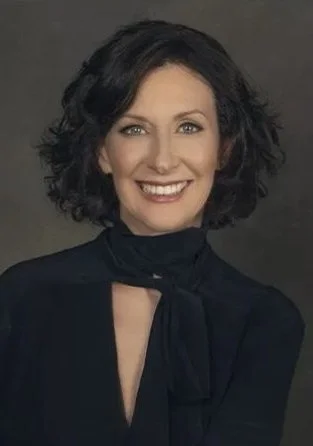
Kathleen Bartholomew
Kathleen was voted one of the "Top 20 Leaders in Healthcare" by Health Leaders Media after her groundbreaking work in transforming the physician-nurse culture. An expert in hospital culture and conflict & confrontation, Kathleen motivates her audiences with practical tools to form the barrier-less relationships which are the most critical foundation of successful healthcare organizations.She speaks to hospital leadership and staff, hospitals boards, nursing leadership, and the military about safety, communication, cultural change and leadership. From the bedside to the boardroom Kathleen applies research to practice with humor and an ethical call to excellence.
Speaking Topics
Patient Safety
Nursing Leadership
Before turning to healthcare as a career in 1994, Kathleen Bartholomew held positions in marketing, business, communications and teaching. It was these experiences that allowed her to look at healthcare from a unique perspective and offer unprecedented insights to healthcare leaders.
As the manager of a 57 bed surgical unit in Seattle, Kathleen quickly recognized that creating a culture where staff felt a sense of belonging was critical to retention. During her tenure as manager, staff, physician and patient satisfaction reached the top marks in the nation as she implemented her down-to-earth strategies for creating accountability in the community. This work laid the foundation for her Master’s thesis on Physician-Nurse Communication and subsequent work on Peer to Peer Hostility.
A well-known but often over-looked business mantra is “culture kills the best of strategies”. Kathleen Bartholomew is an international expert and author of five books on healthcare relationships and culture. A national speaker for over 18 years, she motivates and educates leadership at every level to understand their culture and harness the maximum amount of power within their organizations in order to produce sustained cultural change.
Kathleen is an internationally recognized speaker in the healthcare culture. She speaks to the military, board members, physicians, hospital leadership, and staff. She is best recognized for her ability to craft a message specific to each of these groups and to not only engage all in a common vision, but motivate her audiences to take action.
Kathleen consistently captures her audience with groundbreaking research and the power of story as her participant evaluations illustrate. Healthcare leaders are intrigued by her research on perception vs. reality and the failures of group decision making. She educates healthcare leaders & boards on the role of power and culture in organizational health and enhances their skill and ability to build trust. As Jim Nathan, CEO of Lee Memorial said, “She unleashed a wave of information that had been traveling underground and things kept coming out of the woodwork for weeks.” This underground ‘wave’ is the culture of an institution - and the most monumental challenge to patient safety and leadership.
Kathleen’s passion is infectious. Participants consistently appreciate her practical tips and insights. Her thoughtful presentations inter-laced with research reawaken every employee’s commitment to quality and safety. Everyone that hears her is transformed.

Learn more about Kathleen
Testimonials
KEYNOTE TOPICS
-
Ultimately, it is the confidence and skill with which we hold our everyday conversations that will pave the way to a future time when our patients are safe, our voices are heard, and the skills and knowledge of this incredible profession are valued and utilized.
America needs nurses who are bold and intrepid; who have the confidence and skill to represent this noble profession. And at no other time in history have their voices been so desperately needed. Hospital based errors are now the third leading cause of death in America, despite our professional ethic of "First Do No Harm"—and yet recent surveys show that the majority of nurses are still avoiding difficult conversations. In addition, the health of Americans are insidiously declining as the rates of cancer, diabetes and obesity steadily rise.
Explain two reasons why our country needs nurses who are dauntless.
Assess your confidence level in mastering challenging conversations.
Identify a conversation that you have been avoiding and apply the DESC model.
Discuss how and why courage plays a critical role in becoming dauntless.
-
Part 1 “What You Don’t See…”
Using Professor Diamond’s framework (Collapse), for “How group decisions fail”, this presentation offers a fresh and fascinating look at the hospital culture in light of sociology. Only when we understand the forces that affect us as humans can we have an impact on the world around us. This session speaks to how power, perception and culture affect our behavior as humans.
Objectives:
Understand the carbon-based system: how people in groups react to stress, change and routine.
Give two examples of how you can personally shift the power structure from a hierarchy to a team in your department/organization to create synergy and maximize power.
List two reasons why groups fail at perception
Identify one opportunity to shift your perceptions
Define “culture” and give one example from your work environment
Part 2 “What You Do See…”
The expression “Nurses eat their young” is so far removed from our idea of the caring and nurturing nurse that we shudder to think it could possibly be true. But the truth is, nurses are hurting each other. Stories from the ‘front line’ cannot be ignored. These stories are the voices of nurses telling the world about their experiences. The first step to healing our relationships is the most difficult: to recognize and openly discuss the problem. Only by understanding the origin and reasons for our behaviors can we even begin to create the healing environment that is needed in nursing - for ourselves, as well as our patients.
Objectives
Acknowledge that nurse to nurse hostility is a serious problem.
Explain why nurses experience un-caring behaviors from their peers.
List one action that you can take to build a culture of healthy relationships and/or decrease horizontal hostility in the workplace.
Evaluate the power level of your relationships with managers and physician
Part 3 “What You Can Be…”
How do you lead? And why does the profession of Nursing need every nurse to be a leader? Unfortunately, the ever increasing demands of nursing has not allowed us the luxury of time needed to step back and look at the ‘big picture’ as well as the actions necessary for nurses to practice to their full scope and garner public support. Participants will leave this presentation prepared, empowered, and determined to engage in the leadership conversations that can transform our culture.
Objectives
List three situations that demand a conversation in healthcare.
Recognize the impact of culture on communication and leadership
Describe a conversation you avoid and apply the DESC model to this situation
Understand how to maximize power and resources within a human institution.
Imagine and describe what the profession of Nursing will be like in the year 2050
Describe the impact that nursing could have on the health of America
-
(Based on Sigma Theta Tau’s book: The HeArt of Nursing”, C. Wendler)
Abstract
Nursing is both a science and an art. The science of nursing requires us to stimulate our minds while the art of nursing engages our soul. As we tackle the everyday challenges, it is clear that many of us have forgotten the joy of nursing. Using the power of story, Kathleen inspires nurses to be in awe and appreciation at nurses’ work. This lecture challenges how we look at our own profession, reminding us through the story of the moments where we have connected to another human being on the deepest of levels as we help them to deal with the gamut of human emotions. When we encourage the role of nurse as artist, and integrate these qualities into our daily routine, we unleash our own personal power - Nursing then becomes a place to be nourished rather than drained.
Objectives
Re-kindle your passion for the nursing profession
Describe the benefits of practicing both the art and science of nursing for both patients and nurses
Identify two situations in your practice where you have experienced or observed nursing as “art”
Explain why the art of nursing has been portrayed as “less than” science
-
Abstract
The patient is the one who loses when nurses and physicians are in conflict. Research shows that not only do poor nurse-physician relations affect morale and retention, but also patient mortality. In order to achieve best practice, we need to understand why we play this game and how it started. Learn practical strategies for building good relations that will be ego-boosting for both nurses and physicians and leave this presentation with the courage and determination to improve your working relationships.
Objectives
Identify two strategies that you can implement to improve MD/RN relationships at your workplace.
Explain one reason for the source of physician-nurse conflict.
Recall a situation where you experienced or witnessed a power differential
Describe a current situation in your practice where physicians and nurses play “the Game”.
-
Abstract
In a world characterized by increasing complexity and diversity, in which many are feeling greater alienation, the workplace is a fertile common ground. High-tech companies not only recognize that people are their most important resource, but also strive to create an environment in which their employees can find personal value and meaning in their work. The health care industry lags behind and the shortage of nurses is providing additional challenges. We can measure our effectiveness as nurse managers by the quality of our relationships.
(Kathleen managed a 57 bed Orthopedic and Spine unit in Seattle, Washington. For the last three quarters of her tenure, her unit was in the top 10% of patient, physician and employee satisfaction. With a turnover rate of less than 3% and a waiting list for employment on the unit for over three years, Kathleen’s success is dependent upon one thing: building a community of nurses who feel that they belong and who care about each other.)
Objectives
Recognize the impact of building community on retention and recruitment.
Define community in relationships to the nursing profession.
List two specific activities that will promote community on your unit.
Describe why the art of nursing flourishes in a community setting.

Book Kathleen Bartholomew
Fee Range: $7,500+